
Keratoconus
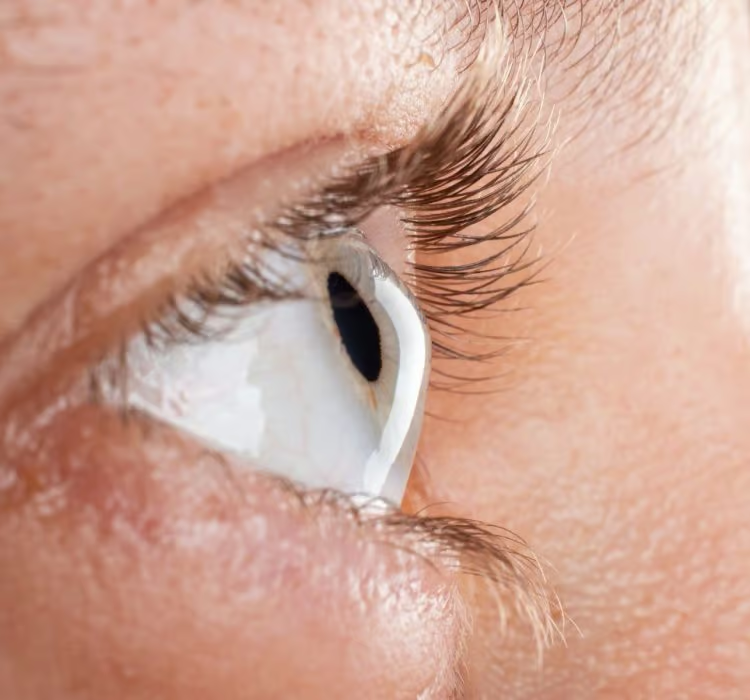
Keratoconus is a very rare eye condition in which the normally round, dome-like cornea (the clear front window of the eye) becomes thin and develops a cone-like bulge. Keratoconus literally means “cone-shaped cornea.”
The cornea is a very important part of your eye. As light enters the eye, it refracts, or focuses, the light rays so that you can see clearly. With keratoconus, the shape of the cornea is altered, distorting your vision.
Keratoconus can make some activities difficult, such as driving, typing on a computer, watching television or reading.
Symptoms
Keratoconus usually affects both eyes, however; symptoms in each eye may differ. Surprisingly, this is not an eye condition that affects only the elderly. Symptoms typically start to occur in people who are in their late teens and early twenties and may include:
- Mild Blurring of Vision
- Distortion of Vision
- Sensitivity to Light
- Glare
- Slight Irritation
Frequently Asked Questions About Keratoconus
The exact cause of keratoconus isn’t fully understood, but it’s believed to involve a combination of genetic factors, environmental influences, and excessive eye rubbing. Having a family history of keratoconus or certain conditions like allergies that lead to frequent eye rubbing can increase your risk.
Keratoconus is typically diagnosed through a comprehensive eye exam that includes corneal mapping (topography), which measures the curvature and shape of the cornea to detect the characteristic thinning and bulging. Since early keratoconus can be subtle, this specialized testing is often key to catching it in its early stages.
In the early stages, glasses or standard soft contact lenses may correct vision adequately. As keratoconus progresses and the cornea becomes more irregularly shaped, specialty contact lenses — such as rigid gas permeable or scleral lenses — are often needed to provide clear, comfortable vision.
Keratoconus often progresses gradually over several years, typically stabilizing by a person’s thirties or forties, though the rate and severity vary from person to person. Regular monitoring allows your doctor to track any changes and adjust treatment as needed.
Most people with keratoconus manage the condition successfully with specialty contact lenses and don’t require surgery. In more advanced cases where lenses no longer provide adequate vision, a corneal transplant may be recommended.
See What Personalized Eye Care Feels Like
Our team is committed to making every visit comfortable, informative, and centered on your unique needs. Schedule your appointment and experience a new level of care.